
| In This Article
1. Heat, Herbs, and Ancient Healing Wisdom 2. What Is a Thai Herbal Compress? 3. The Herbs and Their Properties 4. Health Benefits 5. What the Evidence Shows 6. The Experience at Alanna 7. FAQ |
Heat, Herbs, and Ancient Healing Wisdom
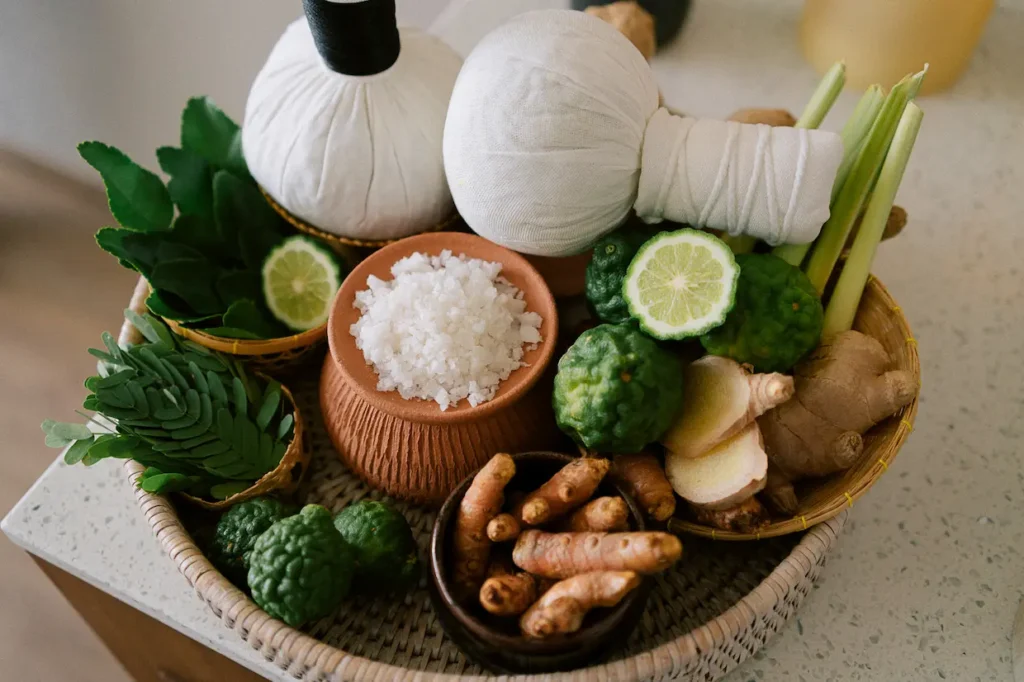
The Thai herbal compress — called luk pra kob in Thai — is one of the most distinctive and therapeutically rich treatments in the Thai healing tradition. A tightly bundled parcel of fresh and dried herbs is heated with steam and then applied rhythmically to the body in a sequence that combines the therapeutic properties of heat, plant chemistry, and therapeutic touch. At Alanna Wellness & Spa in Laguna Bangtao, Phuket, this ancient modality is preserved in its authentic form.

The Herbs and Their Properties
- Lemongrass — anti-inflammatory, analgesic, mood-lifting through citrus volatile oils
- Turmeric — powerful anti-inflammatory, skin brightening, circulatory stimulating
- Galangal — warming, anti-fungal, digestive-supporting
- Prai (Zingiber cassumunar) — pain relief, muscle relaxation, anti-inflammatory
- Camphor and eucalyptus — decongestant, analgesic through volatile oil inhalation
- Kaffir lime leaf — antibacterial, stimulating to the lymphatic system, mood-elevating
What the Evidence Shows
Thai herbal compress (luk pra kob) is among the most clinically studied traditional Thai therapies. A systematic review and meta-analysis of 13 studies involving 778 patients [1] found that Thai herbal compress produced pain relief for osteoarthritis and muscle pain comparable to NSAIDs — with no significant difference between the two treatments. The review identified three synergistic mechanisms: heat conduction increasing regional blood flow to affected areas, anti-inflammatory effects of herbal volatile compounds, and relaxation effects of aromatic oils.
A randomised controlled trial comparing hot herbal compress against topical diclofenac in myofascial pain syndrome [2] found comparable analgesic outcomes between the two treatments over a two-week period. A separate RCT directly comparing Thai massage, Thai herbal compress, and oral ibuprofen in knee osteoarthritis [3] found that topical heat from the herbal compress triggers nerve conduction changes in C-fibres that inhibit pain signals at the spinal segment — confirming the neurophysiological mechanism underlying the clinical pain relief.
These findings validate what Thai traditional medicine has known empirically for centuries: that the combination of therapeutic heat and carefully selected botanical volatile compounds produces genuine analgesic and anti-inflammatory effects.
Frequently Asked Questions
| Is the herbal compress very hot? |
| The compress is applied at a therapeutic temperature — warm enough to penetrate muscle tissue but never uncomfortable. Therapists test the temperature on their own skin before applying it to yours. |
| Can I combine the herbal compress with the thermal journey? |
| Yes — the thermal journey’s sauna and steam room pre-warm the body, making the herbal compress’s heat even more deeply penetrating and the herbs more readily absorbed. |
| Sources
[1] Dhippayom T et al. (2015). Clinical Effects of Thai Herbal Compress: Systematic Review and Meta-Analysis (13 studies, 778 patients). PMC4377500. [2] Boonruab J et al. (2018). Effectiveness of hot herbal compress vs topical diclofenac in myofascial pain syndrome. J Tradit Complement Med, 9(2):163–167. PMID:30963051. [3] Chiranthanut N et al. (2014). Thai Massage, Herbal Compress vs Oral Ibuprofen in Osteoarthritis: RCT. PMC4165631. |