
The Traditional Thai Massage is an ancient healing art that offers profound therapeutic benefits, aligning perfectly with Alanna Wellness & Spa’s philosophy of Holistic Harmony. If you’re seeking to restore balance and flexibility and leave your body aligned, supple, and deeply refreshed, this ritual is for you.
Here is everything you need to know before experiencing this time-honored therapy in our serene sanctuary in Bangtao, Phuket.
What is a Traditional Thai Massage?
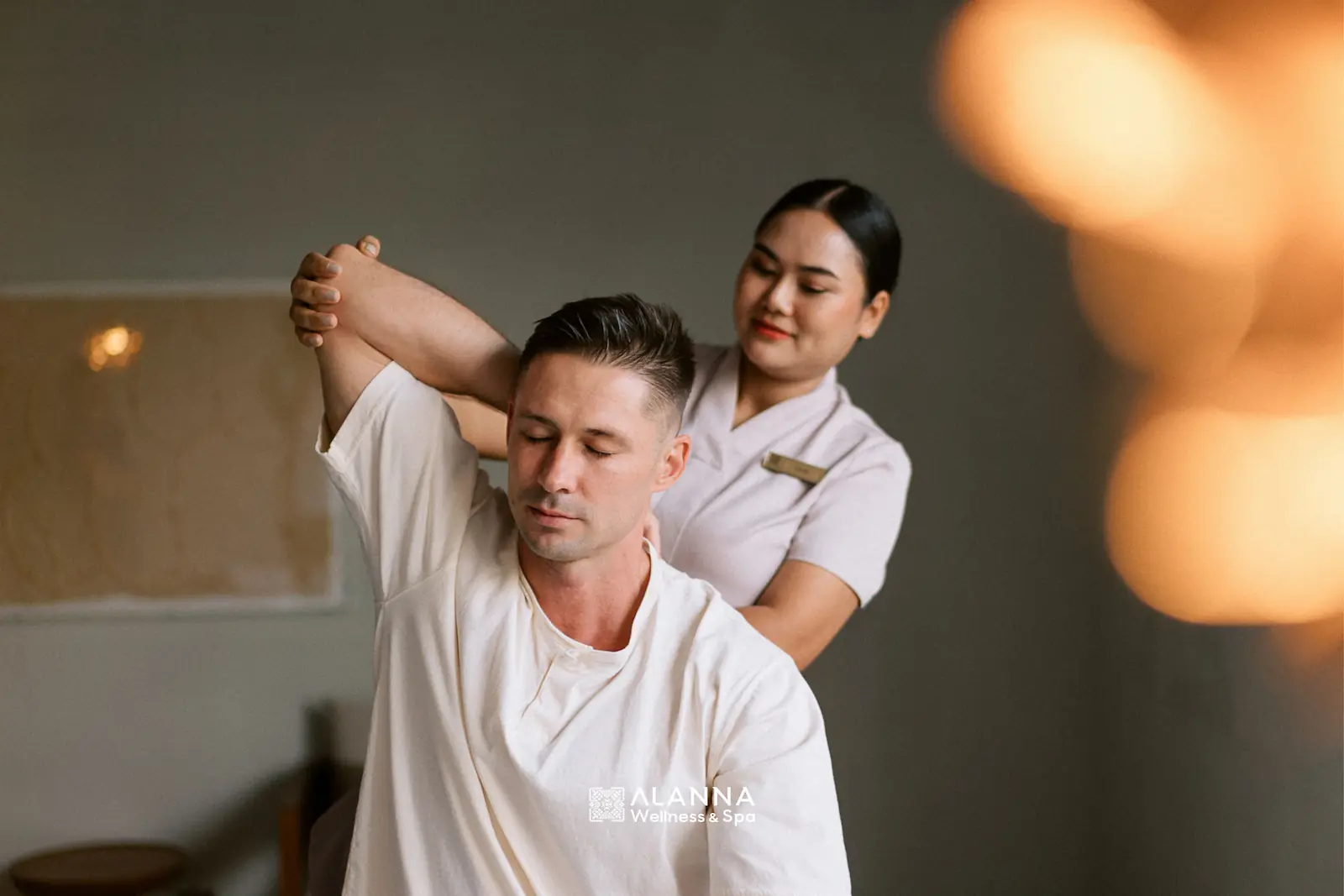
Traditional Thai Massage, known locally as Nuad Thai, is an ancient healing art. It is distinct from Western massage styles, as it doesn’t primarily involve kneading muscle tissue. Instead, it combines acupressure along the body’s energy pathways with assisted stretching. The therapist uses their hands, thumbs, elbows, knees, and feet to apply pressure and guide the body through yoga-like postures.
History of Traditional Thai Massage
The roots of Traditional Thai Massage are believed to trace back over 2,500 years to Dr. Jivaka Komarabhacca, a physician revered in Buddhist tradition as the Buddha’s personal doctor. The practice was preserved and evolved through generations of practitioners, often passed down in Buddhist temples. This rich history highlights its therapeutic depth, aligning its techniques not just with muscle relief but with promoting energy alignment and overall well-being.
Benefits of Traditional Thai Massage
Choosing this ancient therapy contributes significantly to your Wellbeing & Longevity. The key benefits include:
- Flexibility and Mobility: Assisted stretching is a core component, directly working to improve your range of motion.
- Energy Alignment: It works along energy pathways (Sen lines), promoting overall balance.
- Muscular Release: The combination of stretching and acupressure helps to release deep muscular tension.
- Posture Correction: It supports the body in achieving better alignment.
- Deep Refreshment: Leaves the body feeling supple and deeply refreshed.
Techniques Used in Traditional Thai Massage
The effectiveness of this massage lies in its unique range of techniques:
- Acupressure: Applying rhythmic, steady pressure along the ten major energy pathways.
- Assisted Stretching: The therapist moves your body into various yoga-like stretches to increase flexibility and release joint tension.
- Rocking and Compression: Rhythmic movements used to loosen the joints and encourage a state of deep relaxation.
Top 5 Things You Need to Know Before Getting a Traditional Thai Massage
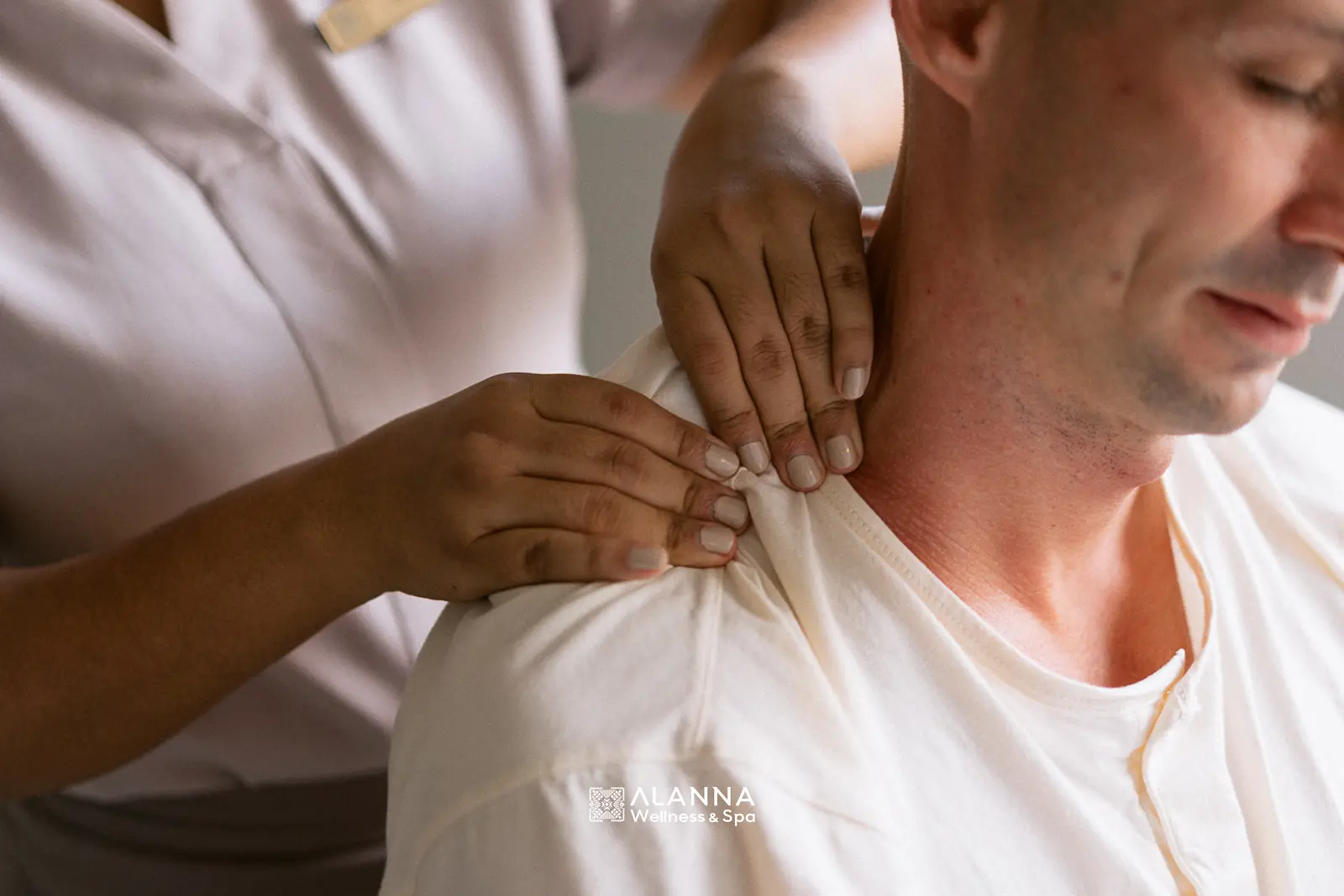
- What to Wear: You will receive special, comfortable, loose-fitting Alanna’s signature loungewear to wear during the massage. This is essential to allow for the assisted stretching and deep pressure .
- No Oils: Unlike Aromatherapy or Hot Stone Massages, Traditional Thai Massage is typically performed without oils on a mat on the floor, allowing for greater leverage in stretching.
- Active Participation: This is not a passive massage. You must actively work with your therapist during the stretches, communicating your comfort level.
- No Chronic Pain is Masked: The therapist will focus on restoring alignment, helping your body fix what’s causing the stiffness, rather than just masking the symptoms of chronic tension.
- Profound Relaxation: Despite the active nature, the experience leaves the body deeply refreshed and is a true pathway to serenity.
Is Traditional Thai Massage Painful?
While the deep pressure and extensive stretching can sometimes be intense, a well-executed Thai massage should never be painfully intense. The experience should feel therapeutic and restorative.
- Communication is Key: Our expert therapists will apply pressure appropriate for your body’s condition. Always communicate immediately if the pressure is too firm or if you feel any discomfort.
- The Goal is Release: The intent is to ease muscular tension and achieve release, leaving you feeling supple, not strained.
Can Anyone Receive Traditional Thai Massage?
Most people can enjoy this therapy, but there are necessary precautions:
- It is generally not recommended for individuals with recent surgery, severe osteoporosis, certain spinal injuries, or late-stage pregnancy (unless cleared by a physician).
- Always inform your therapist during the consultation of any pre-existing medical conditions, injuries, or concerns to ensure a treatment plan that adheres to our commitment to Personalized Care.
How Often Should You Get a Traditional Thai Massage?
For maintenance and consistent flexibility, receiving a Traditional Thai Massage once a month is excellent. For those dealing with stiffness or working to improve a specific area, more frequent sessions (such as weekly or bi-weekly) may be beneficial, particularly when integrated into a structured plan for posture correction and flexibility improvement.
Experience serenity in holistic harmony. Book your personalized wellness experience at Alanna Wellness & Spa today.